

2026 High Level Political Forum
This past week brought me back to New York for two reasons: I was in the Big Apple to attend my Schengen visa interview ahead of my upcoming trip to Europe, while also taking advantage of the opportunity to reconnect with former colleagues and attend discussions taking place alongside the 2026 United Nations High-Level Political Forum on Sustainable Development.
My first stop was, of course: Sweet Linda – a new bar by one of my best friends, Aury.
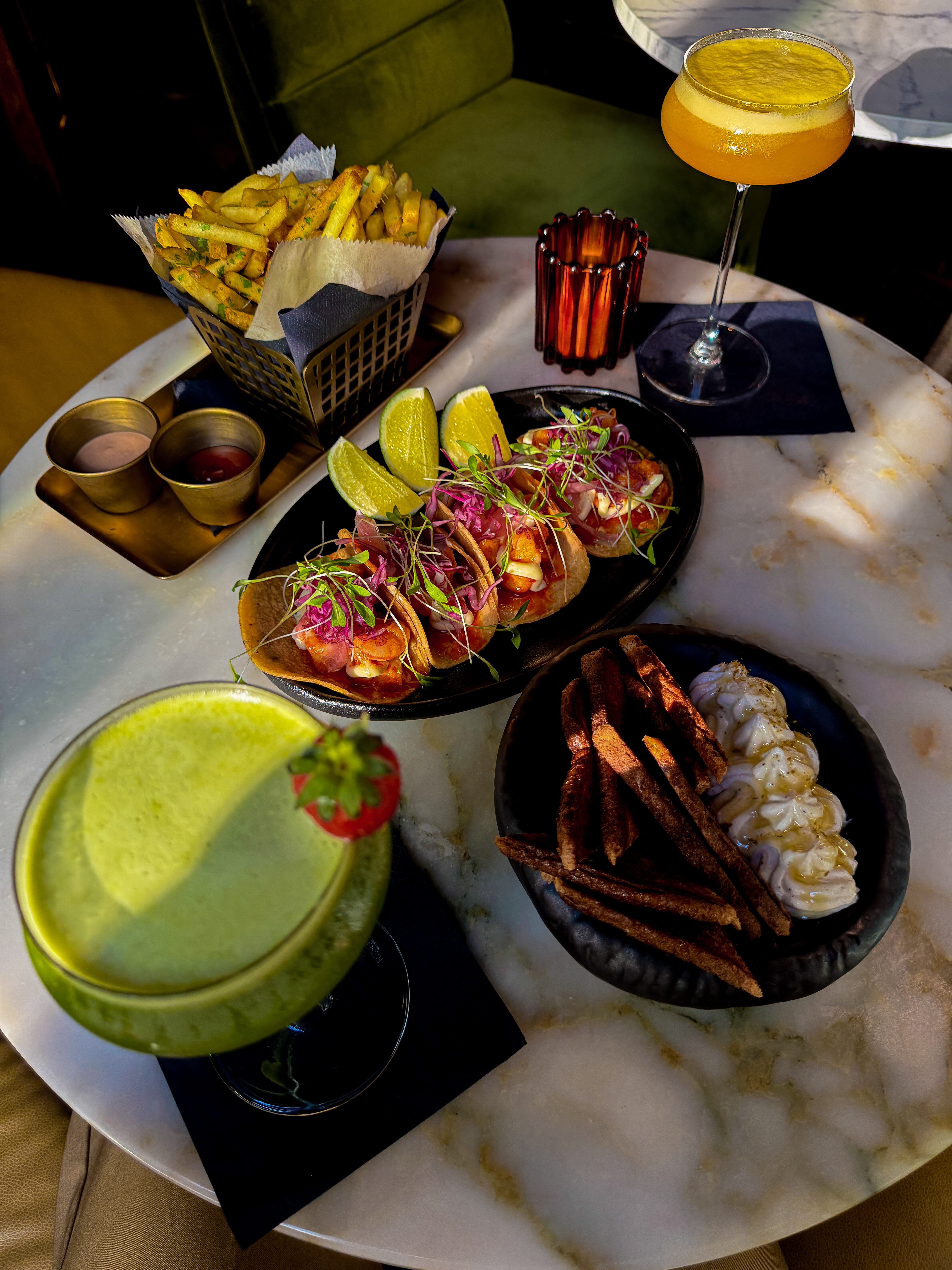
It is such great joy for me to see this happening for Aury - being one of the greatest humans I have literally ever come across.
Read more about Sweet Linda
Foot Traffic
As has often been the case throughout my career, moving between embassies, conference venues, meetings and the United Nations Headquarters meant covering much of the city on foot. Walking is often [and perhaps ironically] the fastest way to travel through Manhattan, and after enough journeys, one begins to notice patterns that are difficult to appreciate from inside a taxi.
Video filmed at Laguardia Airport in New York. Enjoy!
Suppose I need to travel from 44th Street and 1st Avenue to 56th Street and 7th Avenue.
There are numerous possible routes, each differing by only a few minutes. I have never found it worthwhile to stand at the starting point trying to calculate the optimal path. Instead, I clarify what the general direction is, and I simply begin moving towards the destination. If the avenues are flowing, I head north. If the cross streets are moving more freely, I turn west. Every intersection provides new information. A red light may encourage another block north before crossing. A series of green lights may make an earlier turn more efficient than I had anticipated. The route is not predetermined. It emerges through continuous adjustment.
I got to reflect on this: something I do quite intrinsically, yet seem more efficient than how some of my friends move in NY. For me, the optimisation does not occur before movement begins; it occurs because movement has already begun. Every block travelled generates additional information that was unavailable one block earlier. Every decision improves upon the previous one because it incorporates new evidence. Standing still may produce the appearance of careful planning, but it produces very little new information. Movement, by contrast, is itself a mechanism for learning.
This took me on a tangent, and got me thinking about development work.
This Week’s Book
📖 A New Normal [Book 7]
The closing book in the series closes with the same central question that connects all the books in the series:
What Works? In What Context? Under What Circumstances? Why?
After tracing failure, power, dysfunction, impossible economies, denial, and the quiet wars that still shape the Global South, we turn towards the work of building. The book asks what countries, institutions, entrepreneurs, and communities can do when knowledge is more available than ever, but execution under constraint remains the central challenge.
How to Read
To receive your free Kindle copy:
Click the Amazon link below.
Select the Kindle edition while the promotion is active.
Add it to your Kindle library.
You do not need a Kindle device. The free Kindle app works on iPhone, Android, tablets, Macs, and PCs, allowing you to build your digital library wherever you read.
Helpful Links
📚 Read this week’s book for free [search on Amazon or in Kindle for the book that is free for the week, and feel free to purchase the others]:
http://amazon.com/dp/B0FQNJ61SB
📰 Subscribe to The Lessons Conversation:

Africa paperback pre-orders:
https://forms.office.com/r/RMRMKTNd1M


